Welcome
2025 was a year of turning shared purpose into action. Across our global network, members worked together to align approaches, strengthen capabilities and move sustainable agriculture further into implementation.
This report reflects the value of collaboration in helping the agri-food sector navigate complexity, reduce fragmentation and build more resilient, regenerative and commercially viable production systems for the future.
Leadership

2025 reviews
President's review
Robert M. Erhard
It is a privilege to present the SAI Platform Annual Report 2025 and to reflect on the continued evolution of sustainable agriculture, and the role our sector plays in shaping it.
Across the agri-food system, one principle is increasingly clear: sustainability earns its place by strengthening business resilience, not by standing apart from it.
Long-term progress depends on delivering environmental, social and economic outcomes together, through solutions that support efficient operations, responsible resource use and robust business models, while continuing to meet regulatory and societal expectations.
This requires holding purpose and pragmatism closely together.
At farm level, this shift is well underway. The focus is moving towards resilience, long-term viability and continuous improvement. In an environment shaped by market volatility, geopolitical uncertainty and evolving trade dynamics, regenerative agriculture and circular approaches offer practical pathways to strengthen both farm performance and supply chain stability. Being fit for the future is no longer defined by a fixed notion of “world-class” performance, but by the ability to adapt and improve over time.
Sustainable agriculture will scale only where it delivers clear value at farm and business level, this is now the defining test for our collective progress.
Supporting the transition at farm level
At the same time, expectations on farmers continue to grow. Supporting this transition requires solutions grounded in reality, combining science, economics and on-farm experience. A stepwise approach remains essential, recognising the diversity of farming systems and enabling meaningful progress at pace and scale.
A critical enabler is a stronger focus on credible farm and project-level business cases. Demonstrating measurable impact across productivity, resilience and natural resources is essential to inform decision-making and build confidence in scalability. Companies play a key role in working alongside farmers to develop and share such impact cases that are replicable, relevant and grounded in real production systems.
Progress increasingly depends on robust digital farm ecosystems. Data, digital tools and feedback loops are becoming fundamental to support farmer decision-making and continuous improvement.
As artificial intelligence becomes more embedded in agriculture, access to high-quality farm-level data will be decisive. It is credible electronic measurement, reporting and verification that underpin the integrity of reporting from farm level through to business transactions and regulated disclosures.
Across the sector, fragmentation is no longer viable. Multiple frameworks and inconsistent approaches create inefficiencies and limit progress. Alignment, harmonisation and collaboration are therefore not merely aspirations, but necessities to improve efficiency, manage risk and enable scalable solutions.
SAI Platform’s role
Sustainable agriculture will scale only where it delivers clear value at farm and business level, this is now the defining test for our collective progress. It is here that SAI Platform continues to play a critical role. For more than two decades, it has helped align the agri-food industry around shared principles and practices.
Today, its frameworks, including the Farm Sustainability Assessment, the European Roundtable for Beef Sustainability, the Sustainable Dairy Partnership and the Regenerating Together Programme, are increasingly embedded in day-to-day operations, supporting more consistent approaches across supply chains.
The Regenerating Together Programme represents an important step forward. It marks a significant shift from concept to implementation, providing a structured pathway to operationalise regenerative agriculture across commodities and geographies. Its strength lies in connecting scientific insight, business realities and farmer needs into an approach that can be applied in practice and scaled over time.
Looking ahead
At the heart of this progress is the collective effort of SAI Platform’s members. The strength of the organisation lies in its member-driven governance and active working groups, supported by a capable Secretariat translating shared ambition into practical tools and measurable outcomes. The value created is directly linked to the level of engagement, collaboration and commitment across its membership.
After several years of involvement in SAI Platform’s governance, I remain encouraged by the progress achieved and the continued willingness of members to align, learn and act together. As this marks my final contribution as President, I would like to thank all members, the Executive Committee and the Secretariat for their trust, collaboration and commitment.
Looking ahead, the direction is clear. The next phase will be defined by our ability to deliver consistent, credible results at scale: by strengthening alignment, building robust business cases and continuing to invest in practical, scalable solutions. I am confident that SAI Platform will continue to play a leading role in turning shared ambition into meaningful action.
Director General's review
Dionys Forster
The strength of SAI Platform has always come from the willingness of our members to work together. However, geopolitical uncertainty, economic pressure and increasing supply chain complexity are testing the shared ambitions that have guided our industry’s progress.
In times like these, the question is whether we retreat into silos and focus only on immediate pressures or stay the course and continue the work needed to truly strengthen sustainable sourcing and production for the long term.
Yet this is precisely when alignment matters most. The challenges facing agriculture, from climate resilience and nature protection to farmer livelihoods, responsible sourcing and credible reporting are too interconnected for any one company to solve alone. Working separately increases duplication, cost and fragmentation. Working together allows us to align effort, share knowledge and co-develop solutions.
From ambition to implementation
In 2025, SAI Platform focused on the practical conditions required for change: helping members align around shared frameworks, build confidence in measurement, reduce duplication, learn from one another and move from ambition into implementation. This also means keeping sustainability grounded in business reality and farmer experience, so that solutions are credible and workable across diverse production systems. This year, that shared purpose became visible through action across our working groups, industry solutions, projects and member engagement.
The challenges facing agriculture are too interconnected for any one company to solve alone. Working separately increases duplication, cost and fragmentation. Working together allows us to align effort, share knowledge and co-develop solutions.
Collaborative action across value chains
Through our Collaborative Action work, members addressed common challenges across beef, crops and dairy value chains.
The Crops Working Group advanced discussions on regenerative agriculture, emissions reduction, MRV and farmer transition pathways, while the Argentina Peanut Project moved from planning into field-level implementation across 10,000 hectares.
By combining incentives, local engagement and robust measurement, the project is generating insight into how regenerative agriculture can scale across crop systems.
In beef, the European Roundtable for Beef Sustainability (ERBS) strengthened its role as a bridge between science and practice. Members engaged with agroecology, biodiversity, GHG emissions and regulatory readiness, supported by expert input and on farm learning. The launch of the ERBS Nature Toolbox marked an important step in helping members measure, monitor and improve performance across biodiversity, soil health and carbon.
In dairy, the Dairy Working Group advanced alignment in sustainability reporting through the Sustainable Dairy Partnership (SDP), while supporting collaborative work on carbon accounting methodologies, regenerative agriculture and the SDP LATAM Brazil pilot. These efforts reflect the value of collaboration in reducing duplication and improving efficiency across global dairy supply chains.
Our Climate and Special Projects work further connected activity across commodities. From greenhouse gas tool assessments in beef and crops to the Crops Carbon Toolbox, Dairy Mass Balance, and Chain of Custody guidance, members worked together to build knowledge, test approaches, and create resources for more informed decision-making.
Our role is to bring the industry together, create the conditions for alignment and support members in turning shared purpose into action.
Industry solutions
Our Industry Solutions continued to evolve to meet changing member needs.
The Farm Sustainability Assessment (FSA) supported responsible sourcing across 46 countries and 181 crops, while advancing work on a Due Diligence Add-on and enhanced assurance through ASI and the Verification Integrity Programme.
The ERBS launched 12 new 2030 targets, creating a clearer structure across activity, pathway and outcome-based measures.
The Sustainable Dairy Partnership launched SDP 2.0, improving usability, guidance and reporting consistency across global dairy supply chains.
Regenerating Together
A major milestone was the continued development and piloting of the Regenerating Together Programme. With 31 pilot cases across 15 commodities and 21 countries, the RTP moved into widescale testing, showing how a structured, outcome-based approach to regenerative agriculture can be applied across geographies and production systems.
The India smallholder potato initiative, supported by The Rockefeller Foundation and implemented with McCain Foods and PepsiCo, provided a flagship example of field-level implementation, combining agronomic validation with farmer-centred socio-economic indicators.
Member engagement
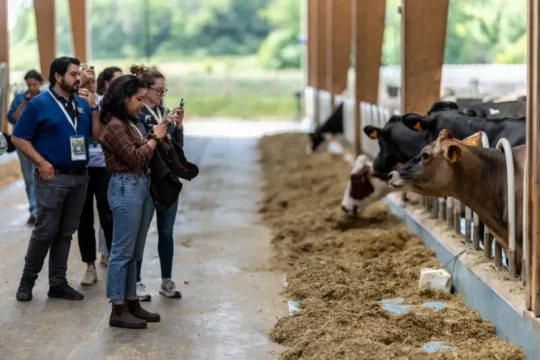
Member engagement remained central to our progress in 2025. Our Annual Event in Paris brought farmers, industry, policymakers, finance leaders, researchers and partners together to explore how regenerative and climate-smart agriculture is moving from ambition to implementation. Across webinars, working group meetings, field visits and peer learning opportunities, members shared knowledge, strengthened capabilities and aligned around common solutions.
The value of SAI Platform lies in our collective effort. Our role is to bring the industry together, create the conditions for alignment and support members in turning shared purpose into action. Looking ahead, the opportunity is clear: to build on this momentum, deepen collaboration and continue developing the tools, partnerships and pathways needed to support more resilient and sustainable food systems.
Our 2030 strategy
In 2025, we began implementing SAI Platform’s 2030 Strategy, marking an important year of transition for the organisation.
Structured around three pillars, the strategy is designed to better align our work with members’ needs and strengthen the way we deliver value across the agri-food sector.
Supported by transversal functions including Communications, Finance, HR and Operations, this structure enables teams and members to work more effectively across priorities, programmes and solutions.
Delivering this strategy depends on the people behind it.
Across the Secretariat, teams work together to support members, coordinate communities, develop industry solutions, strengthen operations and communicate our collective progress. Their expertise, collaboration and commitment help turn strategy into action and ensure SAI Platform continues to deliver value for its members and the wider sector.
Meet our Secretariat team
Organisational structure
Three strategic pillars that build upon one another to accelerate the harmonisation and adoption of industry processes, solutions, and regenerative practices.
Gateway to expertise
We engage, educate and enable members throughout their sustainability journey...
Collaborative action
To drive collaborative action and provide actionable insights...
Industry Solutions
That allow us to create industry standards and solutions.
Our membership
54%
of those are members of SBTi
20%
of those have a Net Zero target
Insights and impact

SAI Platform membership is built on the premise that shared challenges are best addressed through collaboration, alignment and collective action. By bringing together diverse expertise across the agri-food sector, members gain access to practical tools, industry insights, strategic partnerships and peer learning that support more consistent, credible and scalable sustainability approaches. Together, this growing global community is helping drive measurable progress across food and beverage supply chains.
Events and webinars
In 2025, SAI Platform’s events strengthened the shared ambition and collective purpose of its membership, bringing together farmers, industry, researchers, policymakers and partners to address common sustainability challenges.
More than convening moments, these events created space for knowledge exchange, peer learning and cross-sector dialogue that encourage alignment and collaborative action across global food and beverage supply chains.
Annual Event 2025
Scaling Regenerative and Climate-Smart Agriculture
SAI Platform’s Annual Event 2025 brought together members and partners in Paris, France, to explore how regenerative and climate-smart agriculture is moving from ambition to implementation across global food and beverage supply chains.
Held from 19th to 22nd May, the event combined field visits, expert-led discussions, collaborative workshops and peer-to-peer exchange across crops, dairy and beef systems.
Members explored how resilience across supply chains begins on farm, with discussions focused on farmer viability, climate resilience, regenerative agriculture, measurement and verification, and transition pathways for scaling sustainable agriculture in practice.
#SAIPlatform2025 reinforced the importance of bringing farmers, industry, policymakers, finance leaders, researchers and partners together to align around shared approaches and turn sustainability ambition into coordinated action across the agri-food sector.
Webinar series
How shared learning expands industry capacity
Scaling resilient and regenerative food systems depends on continuous learning and knowledge exchange.
Our webinar series brings together industry, research, policy and technical expertise, helping members navigate evolving sustainability challenges and accelerate informed action across global supply chains.
8 part series
Regen reflections
In partnership with Cool Farm, this webinar series explored regenerative agriculture through the lens of MRV, soil health, GHG emissions and farmer resilience, helping members better understand how meaningful measurement and farmer-centred approaches can support scalable and lasting transition.
9 part series
EUDR solutions forum
Hosted by the ERBS in partnership with Efeca, this webinar series supported members to navigate evolving EU sustainability regulations, providing practical guidance and updates on EUDR, CSRD and CSDDD requirements, implementation challenges and supply chain due diligence expectations.
Join us at our next event
Connect in person at one of our workshops, learning journeys, trainings and executive programmes, or online through our exclusive webinars.
Our impact
Our strength lies in our diverse global membership and our ability to bring together the food and beverage industry around shared sustainability challenges and solutions.
Across crops, dairy and beef systems, members collaborate through working groups, industry solutions and collective initiatives that support responsible sourcing and production, while building resilient supply chains.
Our members are working together on
...across four industry solutions
20
ERBS member organisations
121
FSA member organisations
31
RTP pilot member organisations
22
SDP member organisations
Our members are engaged across the value chain
Full members
Affiliate members
Agricultural and farm support associations
Farm service and input providers
Assurance schemes and standard organisations
Non-food and drink companies
Our brand reach
Partnerships
Partnerships are an essential component of scaling. SAI Platform works with a wider ecosystem of organisations, connecting member-led action with specialist knowledge in implementation, measurement and systems change, and helping turn shared ambition into approaches that can be tested, adapted and scaled.
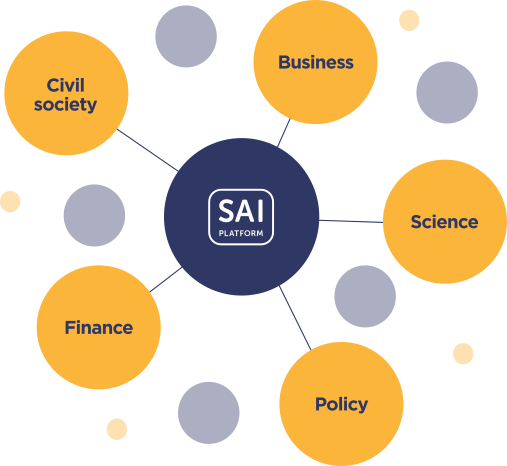
Our partnership ecosystem
Around SAI Platform is a wider ecosystem of organisations that bring expertise, influence and implementation capacity across business, science, policy, finance and civil society.
Our partners
SAI Platform partnered with multiple organisations over 2025 working in aligned areas across the globe, collaborating and sharing knowledge to minimise duplication of effort.
Partner highlights
Cool Farm Alliance
Together with Cool Farm Alliance, we continue the Regen Reflections webinar series, supporting members with shared learning on MRV, soil health, GHG emissions and farmer-centred approaches to regenerative agriculture.
ECAF
During the 2025 Annual Event, we signed a Memorandum of Understanding with ECAF, strengthening collaboration on conservation agriculture and supporting greater alignment around resilient and regenerative farming systems.
EIT Food
Through our partnership with EIT Food, we are advancing innovation, capability building, and scalable solutions for regenerative agriculture, including collaboration on the MRV Solution Challenge to connect industry needs with emerging MRV approaches.
WBCSD and OP2B
Through our strategic partnership with WBCSD/OP2B, we are helping advance alignment across the agri-food sector, connecting industry action with wider efforts to harmonise frameworks, outcomes and approaches for sustainable and regenerative agriculture.
The Rockefeller Foundation
With support from The Rockefeller Foundation, we are bringing the Regenerating Together framework into field implementation. Together with member companies and partners we are developing and testing scalable approaches to ensure regenerative agriculture supports farmer livelihoods.
60 Decibels
As part of project in India with smallholder farmers, we are working with 60 Decibels to develop and validate socio-economic indicators that help better understand farmer adoption, livelihoods and resilience in the transition to regenerative agriculture.
Collaborative action

It is through our communities where shared ownership becomes real-world impact. Through our Beef, Crops and Dairy Working Groups, regional initiatives and targeted projects, members work across the value chain to address sector-specific challenges, test ideas and co-develop solutions grounded in sourcing and production realities.
By sharing knowledge and building consensus, members create approaches that are more relevant, trusted and scalable than any one organisation could achieve alone.
Beef
Building bridges between science and practical application to drive sustainable beef value chains
In 2025, the European Roundtable for Beef Sustainability (ERBS) strengthened its role as a bridge between science and industry, advancing practical approaches to agroecology, biodiversity and climate resilience across European beef systems.
Through external expertise and knowledge exchange, the ERBS supported members in deepening their scientific understanding and translating it into practical application across beef value chains, helping to close the gap between research and on-farm implementation.
The group’s activities increasingly focused on translating knowledge into practical application, enabling members to apply shared insights across their operations and supply chains.
With strong foundations now in place, the ERBS will continue to build on this approach by further integrating scientific expertise, improving alignment across the sector, and supporting the transition to more consistent, outcome-based sustainability practices.
26
members
12
webinars on EUDR readiness, GHG emissions and biodiversity
From knowledge to practical implementation
Through shared tools, expert insights and collaborative platforms, members are better equipped to implement more consistent and credible sustainability practices across their operations. These include:
Navigating increasing regulatory complexity
Understanding and applying biodiversity and climate metrics
Aligning approaches to measurement and reporting
Translating sustainability commitments into farm-level action
Key moments from 2025
Annual meeting in Paris, France
The ERBS held its annual meeting in Paris, welcoming the scientific expertise and contributions of INRAE. Discussions focused on regenerative grazing and agroecological systems. Farm visits demonstrated real-world applications including:
- Diversified pasture systems improving soil health and biodiversity
- Integrated crop-livestock systems
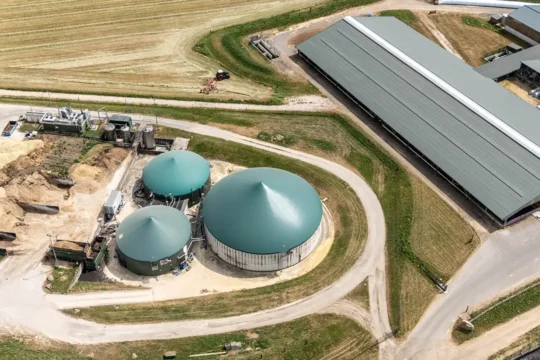
- On-farm methanisation supporting circular resource use and emissions reduction
These exchanges strengthened alignment between science and practice across European beef value chains.
EUDR and regulatory readiness webinar series
The ERBS delivered a nine-part webinar series along with industry experts Efeca to support members in navigating the EU Deforestation Regulation, alongside coverage of CSRD and CSDDD. Sessions provided practical guidance on:
- Geolocation and traceability requirements
- Risk assessment and due diligence
- Supply chain engagement
This work helped members move from regulatory uncertainty to structured implementation across evolving EU sustainability frameworks.
Biodiversity knowledge exchange webinar
A dedicated webinar brought together science and practical tools to deepen understanding of ruminant livestock and biodiversity in France. Discussions covered:
- Biodiversity indicators, including CAP’2ER and BIOTEX
- National programmes and sector initiatives
- Research linking grazing management to biodiversity outcomes and soil carbon
These exchanges supported members in applying consistent, science-based measurement approaches at farm level.
ERBS Nature Toolbox
As part of our ambition to scale the implementation of the Regenerating Together framework, a significant step forward for the beef community was the ERBS Nature Toolbox.
As expectations around nature, biodiversity and carbon continue to increase, the need for consistent and credible measurement is becoming a critical challenge for the sector.
The Toolbox responds by providing a practical and structured approach for members to measure, monitor and improve performance across biodiversity, soil health and carbon.
Designed to support different levels of maturity, it enables members to build capability over time while maintaining consistency in how performance is assessed, helping reduce fragmentation and strengthen readiness for regulatory and market expectations.
Key contributions include:
- Flexible formats (summary, short version and detailed report) to support different levels of engagement
- A structured approach to measuring biodiversity, soil health and carbon across farm systems
- A phased, cost-effective pathway for data collection and performance tracking
- Greater alignment on nature-related indicators across the sector
The launch of the Nature Toolbox marks an important step forward, helping to build a shared understanding of how to measure and manage biodiversity, soil health and carbon across our value chains, while recognising the need for a phased and scalable approach. It provides a practical, science-based pathway to focus on what truly matters and to support continuous progress.
Estelle Rabourdin
ERBS Chair and Quality & Environment Director for Food Services Pilgrim’s Europe
Crops
Advancing regenerative agriculture across global crop systems
In 2025, the Crops Working Group focused on a central challenge: how to significantly reduce agricultural emissions while building greater climate resilience into crop production.
This challenge is bringing regenerative agriculture to the forefront, not only for its potential to reduce emissions and improve soil and ecosystem health, but for its ability to scale across diverse farming systems.
At the same time, the focus is shifting from ambition to implementation, recognising that meaningful progress comes through stepwise, measurable improvements that support farmers in transitioning towards more regenerative models.
136
members
8
new members
3
Working Group meetings
Key insights shaping the crops community
Soil health as the foundation
Regenerative agriculture begins with soil. Practices such as cover cropping and reduced tillage require long-term investment and supportive incentive structures, reinforcing the need for systems that reward sustained improvement.
Shared responsibility across the value chain
Transition requires collective accountability, moving beyond cost-shifting towards value-based collaboration that supports farmers and enables broader adoption.
A strengthening business case
Companies are increasingly investing in regenerative agriculture to build resilience, strengthen supply security and create long-term value, signalling a shift from pilot initiatives towards more integrated strategies.
Equipping members to implement robust sustainability strategies
In 2025, the focus moved further towards translating regenerative agriculture into practice at scale. As expectations increase across both industry and policy, the need for reliable and consistent approaches is becoming more urgent.
A key priority has been advancing scalable approaches to measurement, reporting and verification (MRV), enabling members to track on-farm emissions more consistently and support credible reporting of progress.
Key focus areas included:
- Reducing agricultural emissions while maintaining productivity
- Building climate resilience across diverse crop systems
- Developing credible MRV approaches for on-farm emissions
- Supporting farmers through stepwise transition pathways
- Strengthening the economic case for regenerative agriculture
Together, these priorities are helping members move beyond ambition, applying more consistent and scalable approaches across crop value chains.
Key moments from 2025
Webinar Series
Regen Reflections
Two Regen Reflections sessions ran in 2025, focusing on farmer perspectives and economic realities. The first, Getting Results: A Farmer’s Perspective, and the second, A Just Transition Plan: Ensuring Farmer Income, grounded regenerative agriculture in practical and inclusive transition pathways, connecting real-world conditions to the broader shift underway across the sector.
Webinar
FSA Due Diligence
A dedicated webinar explored how the Farm Sustainability Assessment can be applied in the context of due diligence, supporting members in aligning responsible sourcing with evolving expectations. The session reinforced the role of existing tools in enabling more consistent and credible sustainability practices across supply chains.
London meeting
Crops Working Group Meeting
Members gathered in London for a two-day Crops Working Group meeting focused on the practical challenges and solutions involved in scaling regenerative agriculture. The event provided space for in-depth exchange, supporting greater alignment across members and regions.
In 2025 we saw real momentum on carbon reduction and climate resilience, perfectly aligning with SAI Platform’s Regenerating Together work and strengthened by the Crops Working Group’s invaluable insights for growers.
Brian Nash
Crops WG chair and Corporate Sustainability, Ingredion
Dairy
Aligning sustainability approaches across the global dairy value chain
In 2025, the Dairy Working Group continued to strengthen its role as a forum for collaboration, bringing together leading businesses to align sustainability approaches and support practical implementation across global dairy supply chains.
As regulatory and market expectations accelerate, the need for consistent, efficient and credible sustainability reporting is becoming a defining challenge for the sector. In response, the group is working to reduce fragmentation and create more aligned approaches that can be applied across complex global supply chains.
50+
member companies
Sustainable Dairy Partnership
Driving alignment in sustainability reporting
Advancing alignment across sustainability reporting remains a central priority.
Through the Sustainable Dairy Partnership (SDP), members are working towards a shared approach to exchanging sustainability data. This is helping to reduce duplication and enable more consistent, comparable and credible reporting across the sector.
In 2025, this work reached an important milestone with the launch of SDP Version 2, refining reporting frameworks and strengthening alignment across key sustainability topics. As development continues, the focus is increasingly on usability, adoption and practical integration into member systems.
From alignment to implementation
Alongside reporting alignment, the group is addressing shared sustainability challenges across dairy value chains, supporting members in applying aligned approaches in practice.
Key focus areas in 2025 included:
- Advancing deforestation and conversion free soy sourcing in European supply chains
- Aligning approaches to carbon accounting methodologies
- Supporting the implementation of regenerative agriculture practices
These priorities reflect a broader shift from alignment towards implementation, with members working to embed consistent approaches across sourcing, reporting and on farm practices.
Key moment from 2025
Dairy Working Group meeting, Auburn, New York
The Dairy Working Group held its annual meeting in Auburn, New York, hosted by Cayuga Milk Ingredients. Approximately 70 participants from over 35 organisations came together to strengthen alignment and address emerging sustainability challenges, reinforcing a shared direction across the value chain.
Enabling more efficient and credible sustainability practices
Across the sector, members are navigating increasing complexity, from evolving regulations to growing expectations around transparency and performance. The Dairy Working Group is helping to address these challenges through a collaborative approach, equipping members to implement sustainability strategies that are both practical and scalable. In 2025, this work focused on four priorities:
Reducing duplication in sustainability reporting
Improving consistency and comparability of data
Aligning on key methodologies and metrics
Strengthening supply chain engagement on sustainability topics
As a large chocolate manufacturer, dairy is a core ingredient in our products. We recognise that no single company can address the challenges facing the dairy sector alone. We strongly believe that collaboration through SAI Platform's Dairy Working Group allow us to tackle shared issues more effectively, learn from one another, and move faster than we could individually.
Sonja Frommenwiler
Dairy WG co-chair and Global Head of Responsible Sourcing at Barry Callebaut Group
Join one of our Working Groups
Want to know more about how to get involved with our working groups?
Climate and Special Projects
Strengthening a shared climate approach across value chains
In 2025, Climate and Special Projects played a central role in strengthening alignment across Beef, Crops and Dairy Working Groups, bringing greater consistency to how climate challenges are understood, measured and addressed across the agri-food sector.
As pressure grows to deliver credible climate action, members are navigating increasing complexity, from fragmented measurement approaches to evolving expectations around Scope 3 emissions. This work responds to that challenge by connecting insights across commodities, advancing shared methodologies and supporting practical implementation through multi stakeholder collaboration.
By bringing together technical expertise, research and real-world application, this activity area is helping to build a more consistent and scalable approach to climate action across global value chains.
And looking ahead, as climate expectations continue to evolve, Climate and Special Projects will continue to play a critical role in aligning approaches across commodities, strengthening measurement systems and supporting practical implementation.
By connecting research, collaboration and application, this work is helping to build a more consistent, credible and scalable approach to climate action across the agri-food sector.
Progress at a glance
Cross commodity climate initiatives spanning beef, crops and dairy
Member funded multi stakeholder projects
Dedicated climate focus groups and research programmes
Development of climate knowledge and tools for the Gateway to Expertise
Key developments in 2025
Advancing more consistent approaches to climate measurement
A central focus in 2025 has been improving how greenhouse gas emissions are measured, compared and applied across different systems.
Across commodities, members are working to address a shared challenge: the lack of consistency in tools, methodologies and data exchange.
Through targeted research and collaboration, this included the assessment of measurement tools across Beef and Crop communities, comparative analysis of methodologies to support more informed tool selection, and the creation of structured resources to support consistent decision-making.
Building the foundations for scalable MRV systems
In the Crops community, the formalisation of the Crops Climate Core Group marked a significant step towards a more structured approach to Scope 3 emissions measurement.
Initial work has focused on analysing existing measurement tools, laying the groundwork for more consistent MRV approaches and supporting the development of the Crops Carbon Toolbox.
This knowledge hub within the SAI Platform Learning Academy brings together guidance for carbon-related decision making, support for carbon project implementation, and resources for collaboration and knowledge sharing.
Priority areas for further development:
- Greenhouse gas measurement systems
- Data transfer and sharing frameworks
- Insetting and offsetting approaches
- Farmer incentivisation
This work is helping to move the conversation from methodology to application, providing a clearer pathway towards scalable and practical implementation.
Driving collaboration across the dairy value chain
In the Dairy community, multi-stakeholder collaboration is advancing practical approaches to emissions accounting and supply chain engagement.
The Dairy Mass Balance Chain of Custody Project brought together industry partners to develop guidance aligned with the Greenhouse Gas Protocol, supporting companies in measuring, transferring and reporting emissions profiles across dairy supply chains.
It is critical to have organisations like SAI Platform where these highly impactful industry-wide discussions can take place. Through meaningful work like this, dairy has the opportunity to lead the way in sector-specific GHG accounting guidance.
Kaitlyn Briggs
Senior Manager, Dairy Welfare and Sustainability, Fairlife
Key outputs include:
- Shared terminology for applying traceability requirements
- Guidance aligned with existing GHG Protocol frameworks
- Case studies demonstrating practical implementation
This work is helping to create a more consistent approach to emissions accounting across the dairy sector, supporting more credible Scope 3 reporting.
Expanding into new regions: SDP LATAM pilot
The SDP LATAM Brazil pilot project explored how existing sustainability approaches can be applied in emerging markets.
Led by a group of SAI Platform members and implemented with Brazilian processors, the project tested the feasibility of the Sustainable Dairy Partnership (SDP) in a new context, identifying key barriers to adoption including the need for more structured relationships between processors and farms, and the importance of tailored onboarding approaches in emerging markets. These insights are informing future iterations of SDP and supporting capacity building efforts in Latin America.
Peanuts
Regenerative landscapes partnership: Argentina Peanut Project
As the agri-food sector works to scale regenerative agriculture across crop systems, one of the key challenges remains how to translate ambition into approaches that are measurable, economically viable and capable of working under real farming conditions.
The Argentina Peanut Project (2025–2028) responds directly to this challenge by moving from early planning into field level implementation across one of the world’s leading peanut producing regions.
Covering 10,000 hectares across Argentina’s peanut growing regions, the initiative is focused on developing scalable regenerative farming systems, with particular emphasis on minimum tillage and cover cropping to improve soil health, strengthen resilience and support long term productivity.
Argentina's peanut sector has built a strong reputation for quality, innovation and responsible production. Initiatives like this help develop practical tools, reliable data and shared knowledge that benefit both producers and global partners.
Fundación Maní Argentino
By combining incentives, robust measurement approaches and strong local engagement, the project is helping create the conditions needed to scale regenerative agriculture across crop systems. Working directly with producers and regional stakeholders, the initiative is testing, measuring and refining approaches under real farm conditions to better understand what is required for long term adoption and implementation at scale.
A major focus of the project is strengthening the credibility and consistency of measurement systems. This includes advancing MRV frameworks capable of supporting more robust Scope 3 reporting, while also helping align approaches across supply chains and stakeholders.
Together, this work is helping translate regenerative agriculture into measurable action across crop systems, while generating insights into how implementation, incentives and measurement can work together to support scalable adoption.
Key developments in 2025
Alignment across partners on implementation approaches and methodologies
Engagement with local stakeholders to ensure relevance to regional farming conditions
Advancement of MRV frameworks and data approaches to support credible Scope 3 reporting
Preparation for farmer recruitment and baseline data collection
Argentina's peanut sector has built a strong reputation for quality, innovation and responsible production. Initiatives like this help develop practical tools, reliable data and shared knowledge that benefit both producers and global partners.
Fundación Maní Argentino
Potatoes
Co-creating scalable regenerative agriculture solutions with smallholder farmers in India
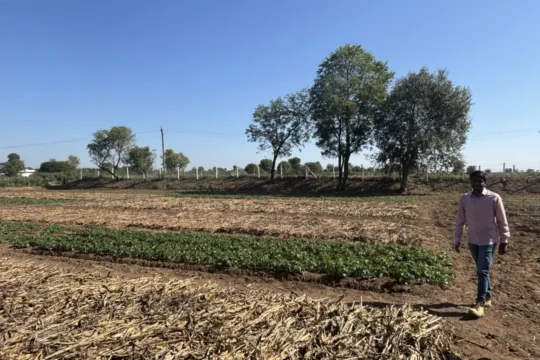
In 2025, SAI Platform launched a regenerative agriculture initiative in India, focused on smallholder potato farming systems.
It is supported by The Rockefeller Foundation and implemented with member companies McCain Foods and PepsiCo, as well as the International Potato Center CIP and social impact measurement organisation 60 Decibels.
As the sector moves from defining regenerative agriculture to delivering it at scale, a key challenge remains: how to translate global frameworks into locally relevant, practical solutions that work for farmers and supply chains alike.
This initiative responds directly to that challenge by bringing the Regenerating Together framework into real world application, testing and validating it under the conditions in which they must ultimately succeed.
Working in partnership with the International Potato Center CIP, regenerative practices are being tested through both research trials and direct engagement with farmers. This ensures that solutions are scientifically grounded, locally relevant and capable of scaling within real supply chains.
2
member companies involved
1
external funder
2
external partners
Key features
Focus on smallholder potato farming systems in India
Field level implementation of SAI Platform’s Regenerating Together framework
Testing regenerative practices under real farm conditions
Development and piloting of socio-economic indicators tailored to regenerative agriculture
Understanding and supporting farmer livelihoods in the transition to regenerative agriculture
Alongside agronomic validation, the initiative is advancing how farmer livelihoods, resilience and economic viability are understood and measured.
In collaboration with 60 Decibels, a socio-economic indicator approach has been developed and piloted to better understand:
- The adoption and long-term success (through continuation) of regenerative practices from a farmer perspective.
- Farmer livelihoods and income stability.
- Resilience to climate and market pressures.
This work seeks to inform how farmer livelihoods in the Regenerating Together framework will be strengthened further.
By aligning agronomic performance with farmer centred measurement, the initiative reinforces a fundamental principle of the Regenerating Together Programme: regenerative agriculture must work for farmers as well as for the environment.
Members involved
Partners
Australia
Building collaborative pathways for climate and nature positive agriculture
In 2025, SAI Platform Australia continued to strengthen its role as a collaborative platform to support the transition towards reduced-emissions, regenerative, and nature-positive production.
Through the development of its new 2025-28 Strategy Plan and a number of targeted initiatives, the organisation is helping its growing membership to navigate the increasing operational, financial and environmental pressures shaping agriculture in Australia.
Our involvement in SAI Platform Australia has created valuable opportunities to develop our capability, strengthen our networks and bolster collaboration across the sector.
Bill Pardy
Head of Sustainable Agriculture, Nutrien Ag Solutions
Connecting industry, research and policy
2025 Annual Forum
The 2025 Annual Forum, held in Canberra, brought together 30 members, speakers and government officials to further explore the role of supply sheds across agricultural supply chains. The forum continues to provide an important platform for two way dialogue between industry, policymakers, researchers and other actors across Australia’s agriculture and food and fibre sectors.
2025 Field Trip
The 2025 Field Trip to Southern Queensland enabled 15 members and three guests to engage directly with innovative producers across the beef cattle, cotton and horticulture industries, while also exploring the latest sustainability research and technical developments. Discussions throughout the visit focused on practical approaches to achieving emissions reduction, regenerative and nature positive outcomes.
Online meetings
Throughout the year, regular online meetings combined expert guest speakers with member roundtable discussions, helping members navigate emerging sustainability topics including climate scenario analysis and nature related financial disclosures.
Supply Shed Project
Exploring new models for shared sustainability outcomes
A major collaborative initiative in 2025 explored how supply shed models can help accelerate greenhouse gas emissions reductions and broader sustainability outcomes across agriculture.
Through desktop research and stakeholder interviews involving industry, corporates, research bodies, technical providers and government, the project examined how supply shed initiatives are currently being applied, how accounting standards and guidance are evolving to support them, and what new financing and insetting models are emerging.
The work also explored how supply shed approaches can help share investment, scale impact and improve collaboration across supply chains, while supporting more aligned and efficient sustainability outcomes at landscape level. Insights from the project are now helping inform national thinking around the design and implementation of future supply shed initiatives in Australia.
China
Advancing practical sustainability solutions across China’s agricultural systems
With the launch of the 15th Five-Year Plan (2026–2030), China reinforces its commitment to sustainability.
The country’s policy direction, anchored in green development, rural revitalisation, and its climate ambitions, is reshaping how agriculture creates value.
Modernisation in China’s agricultural sector today is no longer only about productivity, but about producing more with fewer resources, empowering farmers, and strengthening alignment with global markets.
Against this backdrop, SAI Platform has been steadily gaining momentum in China. The Farm Sustainability Assessment tool (FSA) serves as a reference for translating global sustainability principles into day-to-day agricultural practices in China.
1,000
FSA verifications issued since 2021
122%
increase in verified farmland from 2024
100,000
hectares of farmland covered
FSA 3.0
51 new verifications approved in 2025
Case study
Scaling implementation through local engagement
Supported by BellaTerra Consulting, SAI Platform has continued to strengthen an active community of companies implementing the FSA across China based on local realities and production contexts.
Through training, industry dialogue and direct supplier engagement, the FSA is helping drive more practical and measurable sustainability approaches, from tea production in Fujian Province to corn and soy systems in Northeast China.
Together, these efforts are helping accelerate the adoption of more credible, scalable and locally relevant sustainability practices across China’s agricultural sector.
2
trainings
6
meetings
10
companies engaged on FSA implementation
FSA verification helps us overcome international supply chain barriers, strengthen our brand, and gain a clear edge in client tenders.
Solbar Ningbo Protein Technology Co., Ltd.
By implementing the FSA, we’ve built a standardised, eco-friendly, and traceable supply chain aligned with EU requirements—supporting premium exports and long-term growth.
AAFUD Agriculture (Anhui) Co., Ltd.
The FSA provides a clear, closed-loop approach—from assessment to improvement—showing us that sustainable agriculture connects environment, people, and profitability.
Shandong Yuxin Bio-tech Co., Ltd.
Get involved in our regional initiatives
Want to know more about how to get involved in our work at a regional level?
Industry solutions

Our Industry Solutions provide the frameworks and tools needed to support continuous improvement across farms, supply chains and production systems.
Through the Farm Sustainability Assessment, the Sustainable Dairy Partnership, the European Roundtable for Beef Sustainability and the Regenerating Together Programme, members can align approaches, reduce duplication and support more efficient, measurable and responsible sourcing and production across global supply chains.

European Roundtable on Beef Sustainability (ERBS)
In 2025, the European Roundtable for Beef Sustainability (ERBS) took a significant step forward in strengthening how sustainability is defined, measured and delivered across European beef systems.
From targets to implementation: strengthening a future-ready framework for sustainable beef
As expectations increase for credible, measurable progress, a key challenge for the sector has been moving beyond high-level outcomes towards clearer implementation pathways.
In response, the ERBS evolved its framework into a more structured and actionable system, enabling members to translate ambition into consistent, measurable progress across diverse production systems.
This shift reflects a broader move across the industry: from setting targets to enabling delivery at scale.
12
harmonised 2030 targets introduced
6
national multi stakeholder platforms engaged
70%
of European beef production covered
Key developments in 2025
Building a more structured pathway to 2030
A central development in 2025 was the introduction of a revised target framework, moving from 8 outcome-based targets to a more comprehensive structure of 12 targets.
These span activity-based targets to drive implementation, pathway-based targets to support scaling in emerging areas, and outcome-based targets to measure environmental results. Together, they create a clearer link between action and impact, enabling members to track progress more consistently across different farming systems.
From complexity to clarity: supporting implementation at farm level
A key barrier for members has been translating sustainability ambition into practical action across highly diverse production systems. To address this, the ERBS strengthened the supporting infrastructure around the framework through the publication of explanatory documentation for all targets, implementation guidance for national platforms, an updated reporting template, and clarification of definitions, measurement parameters and reporting expectations.
Together, these provide a more practical and aligned approach, supporting members to apply the framework with greater confidence and consistency.
Strengthening alignment across platforms
Ensuring consistent understanding and application across countries and platforms is critical to delivering credible progress at scale. In 2025, structured training and capacity building were delivered across all participating platforms, covering the new 2030 targets and framework structure, implementation approaches, and monitoring and reporting expectations.
This work is helping to reduce ambiguity, strengthen comparability and align approaches across the European beef ecosystem.
Looking ahead
By moving from outcome-only targets to a structured system that connects action, pathways and results, the ERBS is enabling a more practical and measurable approach to sustainability.
This creates a clearer line of sight from farm-level practices to sector-wide impact, supporting credible environmental progress while ensuring that targets remain achievable within real production systems.
With 2030 as a shared milestone, the ERBS now provides a stronger, more consistent framework that supports alignment, implementation and measurable progress across European beef value chains.
The new 2030 ERBS nature targets mark a pivotal shift for our sector recognising that protecting ecosystems isn’t just good stewardship, it’s foundational to long term productivity and resilience. By restoring nature, we safeguard the resources our industry depends on and demonstrate leadership in building a more sustainable food system.
Barry Larkham-Jones
Chair of the Technical Working Group, ERBS
Find out more about the work of ERBS
To learn more about the work of ERBS or to find out how you can get involved visit our ERBS webpage or contact us.

Farm Sustainability Assessment (FSA)
In 2025, SAI Platform’s Farm Sustainability Assessment (FSA) continued to play a central role as a practical and widely adopted framework for assessing sustainability at farm level.
A trusted foundation for farm-level sustainability and due diligence
As regulatory expectations around supply chain due diligence evolve, members are under increasing pressure to demonstrate responsible sourcing, manage risk and provide credible evidence of sustainability performance.
In response, SAI Platform is evolving the FSA to better support these needs, ensuring it remains both practical for implementation and robust in its assurance.
+180k
farmers using FSA globally
181
verified crops
46
countries
Key developments in 2025
Responding to evolving due diligence requirements
A key development in 2025 was the introduction of a Due Diligence Add-on to the FSA, designed to support members to navigate emerging regulatory requirements.
By extending the FSA beyond assessment, the Add-on enables companies to demonstrate due diligence and manage supply chain risk more effectively. It provides a structured approach to farm-level due diligence, strengthens the link between farm-level data and regulatory reporting, and supports more consistent and transparent risk management across supply chains.
Enhancing verification and system credibility
In 2025, management of verification bodies was transitioned to Assurance Services International, alongside the implementation of a Verification Integrity Programme. These changes improve oversight and increase consistency across verification processes, ensuring the system continues to deliver credible and comparable results.
Together, they reinforce trust in the FSA and support its continued use at scale across diverse farming contexts.
Enabling practical implementation at scale
As the system continues to grow, the focus remains on ensuring the FSA is accessible and actionable across diverse farming systems.
Through benchmarking, engagement and capacity building, the FSA supports alignment across multiple sustainability schemes, practical application across a wide range of crops and geographies, and integration into sourcing and supply chain strategies. This enables companies to apply a consistent approach to farm-level sustainability while reducing duplication across systems.
Demonstrating impact in practice
The continued expansion of the FSA across regions and commodities reflects its role as a widely accepted framework for on-farm sustainability assessment.
Case studies from SVZ in Poland and Collins Higgins Commodities in Indonesia illustrate how the FSA is being applied across diverse contexts. Ongoing engagement through global events including Vegaplan, FNLI and GAP Japan further demonstrates the breadth of FSA adoption in practice.
A strong and trusted framework
By evolving in line with regulatory expectations and reinforcing the integrity of its verification system, the FSA continues to provide a reliable foundation for sustainable agriculture.
It enables credible and consistent farm-level sustainability assessment, stronger alignment between sourcing practices and due diligence requirements, reduced duplication across sustainability schemes, and greater confidence in reported sustainability performance.
The FSA remains a practical and scalable tool for members navigating an increasingly complex sustainability and regulatory landscape.
As sustainability expectations and regulatory requirements evolve, the FSA must continue to adapt. This year we focused on enhancing the credibility of the system and responding to members’ emerging needs, ensuring the FSA remains a robust and trusted framework for sustainable agriculture.
Iver Drabaek
FSA Steering Committee Chair
Find out more about the FSA
To learn more about how you can harness the power of the FSA or to get involved in shaping its future development visit our FSA webpage or contact us.

Regenerating Together Programme
In 2025, the Regenerating Together Programme moved from development into large scale piloting, marking a critical step in turning regenerative agriculture into practical implementation.
Operationalising regenerative agriculture through Regenerating Together
As the industry works to operationalise and scale regenerative agriculture, a central challenge remains: how to apply a consistent, outcome-based framework across different commodities, geographies and farming systems.
Regenerating Together responds to this by providing a structured approach that can be adapted, applied and scaled across supply chains.
In 2025, the release of beta versions of the programme’s core resources, combined with a call to action to members and partners, resulted in 31 pilot cases across 15 commodities in 21 countries. This represents the first widescale testing of the framework. This helped generate practical insights informing revisions of the framework in preparation for broader adoption by industry and farmers.
31
pilot cases
21
countries
15
commodities
Key developments in 2025
Testing regenerative agriculture in practice
Validating how the Regenerating Together framework performs under real conditions has been central to its development. Through pilots and case studies, members tested the programme’s support for diagnostic assessments, measurement of regenerative outcomes, supply chain engagement and adoption of regenerative practices at farm level.
Case studies released in 2025, including applications from FFDI, Royal Canin with Soil Capital and Mondelēz, demonstrate practical implementation pathways across different commodities and value chains, helping refine the framework and build confidence in its application across diverse systems.
Learning through collaboration
To support exchange and continuous improvement, the programme convened a series of Community of Practice sessions throughout the year, creating space for members and partners to share insights, challenge assumptions and align on how the framework should evolve.
Alongside this, collaboration with external organisations including WBCSD, OP2B, NIAB and EIT Food is supporting alignment with complementary initiatives, reducing duplication and improving interoperability across the wider ecosystem.
Building the foundation for credible claims
A key objective of the programme is to enable credible supply chain claims linked to regenerative agriculture. The pilot phase is laying the groundwork by validating how successful framework implementation can be verified.
Following its public launch in 2026, the programme will enable third-party verified claims, providing a clear and credible mechanism for companies to demonstrate the operationalisation and assurance of regenerative agriculture at farm level.
An adaptable, scalable framework for regenerative agriculture
The Regenerating Together Programme is establishing a practical pathway for regenerative agriculture to be implemented consistently across the sector.
It enables a shared, outcome-based approach, greater alignment across initiatives and supply chains, practical implementation across diverse farming systems, and a foundation for credible and verifiable claims.
The progress made in 2025 shows that regenerative agriculture can move from ambition to implementation when industry works with a shared framework and a practical pathway for action. Through pilots across commodities, geographies and farming systems, the Programme is helping build the evidence, confidence and collaboration needed to scale credible regenerative agriculture across global supply chains.
Yves Leclerc
Senior Director, Global Agronomy & Planet-Friendly Practices, McCain Foods and RTP SteerCo Chair
Join our regenerative agriculture journey
To learn more about our Regenerating Together Programme or how you could get involved in shaping its future development visit our RTP webpage or contact us.

Sustainable Dairy Partnership (SDP)
In 2025, SAI Platform’s Sustainable Dairy Partnership (SDP) took a significant step forward in addressing one of the most persistent challenges in the dairy sector: fragmented and duplicative sustainability reporting across global supply chains.
Strengthening sustainability reporting across the dairy sector
As expectations increase transparent and verifiable data, companies are under growing pressure to report consistently while managing multiple buyer requirements, national programmes and internal systems.
The SDP responds to this challenge by providing a single, industry-aligned approach to sustainability reporting, enabling greater consistency, comparability and efficiency across the value chain.
The launch of SDP 2.0 marks a pivotal moment in this evolution, strengthening the system’s usability, clarity and credibility, and supporting its role as a practical reporting infrastructure for the dairy sector.
76
active users across the supply chain
35%
global milk supply represented
4
continents
Key developments in 2025
Building a more consistent and credible reporting system
At its core, the SDP provides a structured approach to reporting against the 11 criteria of the Dairy Sustainability Framework, supported by a robust assurance system. Companies can progressively implement and verify sustainability practices through a five-stage maturity model, covering legal compliance, human rights, animal welfare and deforestation, alongside continuous improvement planning and KPI-based monitoring.
Mandatory external verification of greenhouse gas emissions and animal care indicators from Stage 3 onwards strengthens data credibility, while formal alignment with national programmes supports consistency across regions.
From complexity to clarity: SDP 2.0
A major milestone in 2025 was the launch of SDP 2.0, reflecting a clear focus on improving usability and reducing operational complexity.
Developments included consolidated implementation and verification guidance, clearer terminology and reporting structure, enhanced reporting tool functionality, and a structured reporting cycle aligned with operational timelines. Key areas of improvement include:
Reporting duplication
A single reporting interface recognised across multiple stakeholders, streamlining data submission across buyers and national programmes.
Data credibility and comparability
Standardised reporting against industry criteria, with defined verification protocols and external assurance requirements.
Sustainability progression
A five-stage maturity model guiding implementation over time, with clear thresholds for farm programme coverage and performance.
National programme alignment
Recognition of existing systems, including Origin Green, QM-Milch and the U.S. Dairy Stewardship Commitment, enabling companies to report once across multiple frameworks.
Demonstrating implementation in practice
Adoption of the SDP continues to grow, with companies increasingly using it to implement and verify sustainability reporting across their supply chains. In 2025, Kerry Dairy Ireland achieved Stage 5 verification, demonstrating full implementation of SDP requirements and independently verified reporting across its supply base.
This provides a clear example of how the system supports credible, operational sustainability reporting at scale.
Looking ahead
By providing a single, structured and verified approach to sustainability reporting, the SDP is helping the dairy sector move beyond fragmented systems towards greater alignment and efficiency.
It enables consistent and comparable sustainability data, reduced reporting duplication across value chains, stronger alignment between farm, processor and buyer levels, and more credible and transparent reporting.
In doing so, the SDP is establishing the foundations for a more coherent and scalable approach to sustainability across global dairy supply chains.
As a manufacturer of dairy products and ingredients, globally aligned approaches such as the SDP and its streamlined reporting are essential to decision-making, efficiency and sustainability outcomes. This is where SAI Platform enables the sector-wide collaboration necessary to make this possible, and we encourage more of the industry to get involved.
Darrin Monteiro
Chief Member Relations Officer at California Dairies, Inc.
Find out more about the SDP
To learn more about the Sustainable Dairy Partnership or how you could get involved in shaping its future development visit our SDP webpage or contact us.
Finance

In 2025, we maintained a stable financial position, underpinned by the continued engagement of our member community and prudent financial management. Total operating income reached €4.37 million, representing a slight increase compared to 2024.
Revenue vs operating expenses
Year-on-year comparison of revenue vs operating expenses (€’000) – 2024 / 2025.
Membership contributions remained our primary source of revenue, reflecting the ongoing commitment of our members to advancing sustainable agriculture through pre-competitive collaboration.
To deliver our 2025–2030 strategy, we are continuing to diversify funding beyond membership contributions. In 2025, we secured grant funding from The Rockefeller Foundation for the co-creation of scalable regenerative agriculture solutions with smallholder farmers, and from the European Commission via the Swiss State Secretariat for Education, Research and Innovation for the Trails4Soils project.
Total operating expenses increased compared to the previous year, reflecting planned investment in strategy implementation, programme delivery, operational development and organisational capabilities. This resulted in a small operating deficit in 2025, which was more than offset by non-operating income recognised during the year. As a result, we closed the year with a final surplus of €123k.
At year-end, we remained in a solid financial position, with healthy reserves providing a stable foundation for continued industry collaboration, the development of innovative industry solutions and impact across global value chains.
Total reserve
Year-on-year comparison of total reserve (€’000) – 2024 / 2025.
The financial statements for SAI Platform for the year ended 31 December 2025 were audited by Fiducaire TECAFIN SA, Geneva, Switzerland on April 24th 2026.
Join SAI Platform today
Become part of the leading global initiative uniting the agri-food industry in the drive towards sustainable agriculture.